
Innere Stadt Guide
Vienna's historic 1st District — Stephansdom, Graben, Kohlmarkt, the Hofburg, legendary coffeehouses, and the soul of the imperial capital
Powered by ITINE
Get this guide as a tappable itinerary
Day-by-day plan, audio tours, and one-tap Google Maps — completely free.
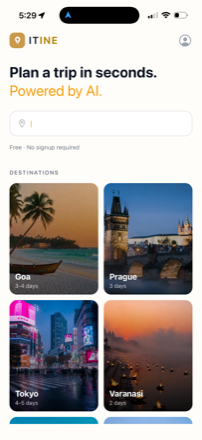
Destinations
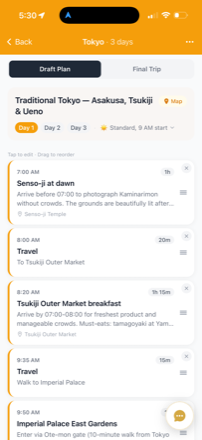
Your Itinerary
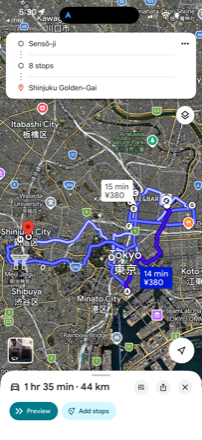
Google Maps
Innere Stadt is German for "Inner City" — it's the official name for Vienna's 1st district, the historic core encircled by the Ringstrasse. The Innere Stadt is Vienna distilled to its essence — a compact square kilometer where Roman ruins lie beneath medieval lanes, Baroque palaces face Gothic cathedrals, and the coffeehouses where Freud and Trotsky once debated still serve melange and Apfelstrudel with impeccable old-world grace. This is the 1st District, the historic core encircled by the grand Ringstrasse boulevard, where every street tells a story and every building carries centuries of Habsburg history. From the soaring spire of Stephansdom to the imperial sprawl of the Hofburg, from the luxury boutiques of Kohlmarkt to the hidden courtyards of Blutgasse — this guide covers everything you need to explore Vienna's magnificent old town.
Key Areas to Explore
The Innere Stadt's greatest streets, squares, and landmarks.
Stephansplatz & Stephansdom
The Heart of ViennaStephansplatz is the geographic and spiritual center of Vienna, dominated by the soaring Gothic spire of Stephansdom (St. Stephen's Cathedral). The cathedral has stood here since the 12th century, its multicolored glazed tile roof — featuring the Habsburg double-headed eagle — visible from across the city. The South Tower rises 136 meters and can be climbed via 343 steps for panoramic views over the rooftops. Below ground, the catacombs hold the remains of thousands of plague victims and the internal organs of the Habsburg emperors. The square around the cathedral is the natural starting point for any exploration of the Innere Stadt — from here, the pedestrian streets radiate outward to every corner of the old town. Street performers, horse-drawn carriages (Fiaker), and the constant flow of Viennese life make Stephansplatz one of Europe's great urban spaces.
Highlights
Graben & Kohlmarkt
Elegant & SophisticatedThe Graben and Kohlmarkt are Vienna's most elegant pedestrian streets — a continuous promenade of Baroque and Art Nouveau facades, luxury boutiques, and historic establishments that embody the city's refined character. The Graben, originally a Roman defensive ditch (its name means "trench"), is now a broad, tree-lined boulevard centered on the Pestsaule (Plague Column), an ornate Baroque monument erected in 1693 after a devastating plague. The Kohlmarkt, which connects to the Graben at a right angle, leads directly to the Hofburg Palace and is lined with the most prestigious names in fashion and jewelry — Cartier, Louis Vuitton, Chanel, and Tiffany. But the real treasures are the Viennese institutions: Demel (the imperial confectioner, famous for its Sachertorte and window displays), Julius Meinl (the legendary food hall), and the elegant cafes that line both streets. Walking the Graben-Kohlmarkt axis at twilight, when the shop windows glow and the Pestsaule is illuminated, is one of Vienna's quintessential experiences.
Highlights
Am Hof & Freyung
Historic & ArtisticAm Hof is Vienna's oldest square, where the Babenberg dukes established their court in the 12th century — predating the Habsburgs by a century. The square is framed by Baroque palaces and dominated by the Kirche Am Hof (Church of the Nine Choirs of Angels), from whose balcony the end of the Holy Roman Empire was proclaimed in 1806. Today, the square hosts one of Vienna's best Christmas markets and a regular antiques market. A short walk north leads to the Freyung, another historic square surrounded by palaces including the Palais Ferstel (now housing the elegant Freyung Passage shopping arcade and Cafe Central). The Schottenkirche (Scottish Church, actually founded by Irish monks) anchors one end, while the Kunstforum Wien hosts major art exhibitions. The area between Am Hof and Freyung contains some of the most atmospheric medieval lanes in Vienna — narrow passages that have barely changed in centuries.
Highlights
Hofburg Palace & Heldenplatz
Imperial & MajesticThe Hofburg is not merely a palace — it is a city within a city, a sprawling complex of wings, courtyards, and gardens that served as the Habsburg seat of power for over six centuries. The Imperial Apartments reveal how Franz Joseph and Empress Sisi lived. The Sisi Museum chronicles the tragic empress's life. The Imperial Silver Collection displays the dynasty's staggering tableware. The Spanish Riding School trains its famous Lipizzaner horses in a Baroque masterpiece of a riding hall. The Austrian National Library's Prunksaal (State Hall) is one of the most beautiful library rooms in the world. Heldenplatz, the vast square before the Neue Burg wing, is where history was made — from imperial parades to Hitler's 1938 Anschluss speech. Today the Hofburg houses the offices of the Austrian president and several world-class museums. Plan at least half a day to explore the complex properly.
Highlights
Kärntner Strasse & Opera Quarter
Lively & CulturalKarntner Strasse connects Stephansplatz to the Vienna State Opera and the Ringstrasse, creating a vibrant pedestrian corridor that is one of the most-walked streets in the city. The street itself is commercial — international brands and souvenir shops dominate — but the side streets hide excellent restaurants, traditional Beisl (Viennese pubs), and historic buildings. The Vienna State Opera at the southern end is one of the world's great opera houses, and standing-room tickets from just €4 make world-class performances accessible to every budget. The Hotel Sacher, directly behind the Opera, is home to the original Sachertorte — the legendary chocolate cake that has been made to the same secret recipe since 1832. The Albertina museum, just steps away, houses one of the world's greatest print and drawing collections alongside major temporary exhibitions.
Highlights
Legendary Coffeehouses
Vienna's coffeehouse culture is UNESCO-recognized — these Innere Stadt institutions are where the tradition lives on.
Cafe Central
Herrengasse 14The most famous coffeehouse in Vienna, housed in the magnificent Palais Ferstel with soaring vaulted ceilings and marble columns. Cafe Central was the intellectual salon of its era — Trotsky played chess here, Freud debated here, and the poets Peter Altenberg and Hugo von Hofmannsthal held court at their regular tables. Today it is inevitably touristy, but the grandeur of the space, the quality of the pastries, and the impeccable Viennese coffeehouse service make it essential. The Apfelstrudel is excellent, and the melange (Vienna's signature coffee, similar to a cappuccino) is served with the traditional glass of water.
Demel
Kohlmarkt 14The imperial and royal confectioner (k.u.k. Hofzuckerbacker) has been operating since 1786, and the elaborate window displays of handcrafted chocolates and pastries are works of art. Demel's Sachertorte competes fiercely with Hotel Sacher's version — the difference is in the apricot jam placement (Demel puts it under the chocolate glaze, Sacher between the cake layers). The interior is a gilded time capsule of imperial elegance. The waitresses still address customers in the third person, a charming anachronism of old Viennese formality.
Cafe Sacher
Philharmoniker Str. 4 (Hotel Sacher)The home of the Original Sachertorte, created by Franz Sacher in 1832 for Prince Metternich and fiercely guarded ever since. The cafe inside the Hotel Sacher is plush, formal, and unapologetically old-world — red velvet, crystal chandeliers, and portraits of the Habsburg era. The Sachertorte here is denser and more intensely chocolate than Demel's version, served with a generous dollop of unsweetened whipped cream (Schlagobers) that balances the sweetness perfectly. Expect a queue, especially on weekends.
Cafe Hawelka
Dorotheergasse 6The bohemian counterpoint to Cafe Central's grandeur. Hawelka was the gathering place of Vienna's postwar artists and writers — dark, smoky (no longer, by law), and atmospheric in a way that the grander coffeehouses cannot replicate. The famous Buchteln (sweet filled buns) are made from Frau Hawelka's original recipe and served warm from the oven every evening from around 10 PM. The interior has barely changed in decades, and the atmosphere of artistic Vienna lingers in the worn velvet seats and crowded walls.
Shopping in the Innere Stadt
From luxury flagships to hidden artisan workshops — the 1st District's best shopping.
Kohlmarkt
Vienna's premier luxury shopping street. Cartier, Louis Vuitton, Chanel, Tiffany, and Prada alongside Demel and other Viennese institutions. Beautifully maintained Baroque and Art Nouveau facades create the most elegant shopping promenade in the city.
Graben
Broad pedestrian boulevard with a mix of international brands and Viennese specialty shops. The Pestsaule at the center, flanked by elegant buildings, makes this as much a sightseeing destination as a shopping street. Excellent jewelry shops and traditional Austrian clothing stores.
Tuchlauben & Side Streets
The narrow streets between Graben and Am Hof hide Vienna's most interesting specialty shops — handmade ceramics, traditional Loden clothing, antique dealers, artisan chocolatiers, and independent bookshops. Less polished than the main boulevards, but more rewarding for unique finds.
Dorotheum
The Dorotheum is one of the world's oldest auction houses, founded in 1707 by Emperor Joseph I. Even if you are not bidding, browsing the showrooms is like visiting a museum — paintings, jewelry, antiques, and decorative arts from across the centuries. Public auctions are free to attend and fascinating to watch.
Insider Tips
Walk the Ringstrasse
The Ringstrasse boulevard encircles the Innere Stadt and passes Vienna's greatest buildings — the State Opera, Parliament, Rathaus (City Hall), Burgtheater, University, and Votivkirche. Walking the full ring takes about 90 minutes. Alternatively, tram lines 1 and 2 follow the ring and give you a seated tour of the same monuments.
Visit Stephansdom Early or Late
The cathedral is free to enter but crowded midday. Visit at opening (6 AM on weekdays, 7 AM Sundays) for near-empty aisles and beautiful morning light, or in the evening when the tour groups have gone. The South Tower climb (€6) is best in the morning for clearest views.
Standing Tickets at the Opera
The Vienna State Opera sells 567 standing-room tickets (Stehplatz) for every performance from just €4. Tickets go on sale 80 minutes before the curtain. Queue 60-90 minutes before sale time for the best spots. This is one of the world's great cultural bargains — the same performances for which seated tickets cost €200+.
Explore the Courtyards
The Innere Stadt is full of hidden courtyards (Durchhauser) accessible through archways in the building facades. Many contain cafes, galleries, or simply beautiful quiet spaces. The passage from Blutgasse to Domgasse, the courtyards around Heiligenkreuzerhof, and the Freyung Passage are particularly worth exploring.
Eat in the Side Streets
The main pedestrian streets (Karntner Strasse, Graben) are lined with tourist-priced restaurants. Walk one block into the side streets for dramatically better value and more authentic food. The lanes around Blutgasse, Backerstrasse, and Wollzeile have excellent traditional Beisl with local pricing.
Free Entry on First Sundays
Many Vienna museums offer free entry on the first Sunday of each month. The Kunsthistorisches Museum, Belvedere, and several others participate. Check individual museum websites for current offers — this can save significant money on a culture-heavy itinerary.
Explore More of Vienna
Continue your exploration beyond the Innere Stadt with our guides to Vienna's other great neighborhoods and attractions.
Frequently Asked Questions
Get Your Free Travel Guide
PDF download + weekly travel tips
Join our community and get a comprehensive travel guide with maps, budgets, and insider tips delivered to your inbox.
Unsubscribe anytime. No spam, we promise.