
Wachau Valley Day Trip
Explore the UNESCO Danube Valley — Melk Abbey, Dürnstein castle ruins, world-class wine, and one of Europe's most scenic river cruises
Powered by ITINE
Get this guide as a tappable itinerary
Day-by-day plan, audio tours, and one-tap Google Maps — completely free.
Destinations
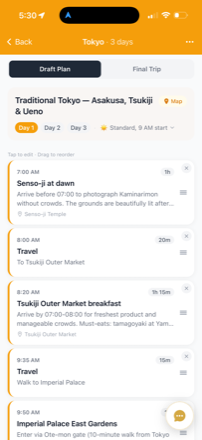
Your Itinerary
Google Maps
The Wachau Valley is the most beautiful stretch of the Danube — a 36-kilometer UNESCO World Heritage corridor between Melk and Krems where vine-terraced hillsides rise steeply from the river, medieval castles perch on rocky outcrops, and charming villages with Baroque churches line the waterfront. At the western end, Melk Abbey stands as one of Europe's greatest Baroque buildings — a golden-white monastery on a cliff that takes the breath away. At the river's edge, the village of Durnstein guards the castle ruins where Richard the Lionheart was imprisoned. And everywhere, the vineyards that produce Austria's finest Gruner Veltliner and Riesling cover the slopes in neat terraced rows. A day trip from Vienna to the Wachau combines architectural grandeur, natural beauty, historical drama, and world-class wine into one of the most rewarding excursions in Central Europe.
80 km
From Vienna
36 km
Valley Length
€14
Melk Abbey Entry
Full Day
Recommended
Getting There
Train from Vienna to Melk
The most practical way to reach the Wachau Valley is by train from Wien Hauptbahnhof or Wien Westbahnhof to Melk, which takes approximately 1 hour. Trains run frequently throughout the day. From Melk, the abbey is a 10-minute uphill walk from the station. This option works especially well combined with a downstream cruise from Melk to Krems through the heart of the Wachau, with a train back to Vienna from Krems (also about 1 hour). The OBB (Austrian Federal Railways) sells combination tickets that include train and boat segments, offering good value for the full Wachau experience.
Danube River Cruise
The Wachau river cruise between Melk and Krems (or Durnstein) is one of the most scenic waterway journeys in Europe. The boat glides past vineyard-covered hillsides, medieval castles perched on cliffs, charming riverside villages, and the dramatic narrows of the Danube gorge. DDSG Blue Danube and Brandner Schiffahrt operate regular services from April to October. The downstream journey (Melk to Krems) takes about 1.5 hours; upstream (Krems to Melk) takes about 3 hours against the current. Most visitors take the train to Melk, visit the abbey, then cruise downstream to Krems — the classic and most scenic Wachau day trip itinerary.
Organized Day Tour from Vienna
Organized day tours from Vienna typically combine Melk Abbey, a Wachau Valley drive or cruise, a stop in Durnstein, and wine tasting at a local vineyard. The tours handle all logistics — hotel pickup, transport, guide, and often include abbey admission and a wine tasting. The guides provide valuable context about the region's history, winemaking traditions, and landscape. Full-day tours allow for a comprehensive experience without the stress of coordinating trains, boats, and schedules independently. Some premium tours include lunch at a Wachau restaurant.
Rental Car
A rental car gives maximum flexibility to explore the Wachau at your own pace — stopping at viewpoints, visiting smaller villages off the main route, and accessing wineries that are difficult to reach by public transport. The drive along the B3 (Wachau Strasse) between Melk and Krems hugs the Danube and is one of Austria's most scenic roads. The freedom to stop at any of the dozen charming villages along the river — Spitz, Weissenkirchen, Joching — and explore on your own schedule makes a car the best option for wine enthusiasts who want to visit multiple producers.
What to See
The Wachau Valley's essential stops, from Baroque abbey to vineyard villages.
Melk Abbey (Stift Melk)
UNESCO World HeritageMelk Abbey is one of the world's most magnificent Baroque buildings — a vast Benedictine monastery perched dramatically on a rocky bluff above the Danube, its ochre-and-white facades and twin towers visible for miles along the river valley. Founded in 1089, the current buildings date from a spectacular 18th-century reconstruction by architect Jakob Prandtauer. The interior is a masterpiece of Baroque excess — the abbey church features ceiling frescoes by Paul Troger that create the illusion of infinite heavenly space, gold leaf covers every surface, and the ornate pulpit and high altar are works of extraordinary craftsmanship. The library, containing 100,000 volumes including irreplaceable medieval manuscripts, has a painted ceiling and is one of the most beautiful rooms in Austria. Umberto Eco set part of "The Name of the Rose" here. The terrace offers sweeping views over the Danube and the Wachau Valley below.
Dürnstein
Iconic VillageThe small town of Durnstein is the Wachau's most photogenic destination — a cluster of medieval and Baroque buildings along the riverbank, dominated by the blue-and-white tower of the Augustinian monastery and the dramatic ruins of Kuenringerburg castle on the cliff above. The castle is famous as the place where King Richard the Lionheart of England was imprisoned in 1192 after returning from the Third Crusade — the legend says his faithful minstrel Blondel searched castle by castle, singing outside the walls until he heard Richard's voice singing back. The climb to the castle ruins takes about 20 minutes and rewards with panoramic views over the Danube bend. The town itself is charming — narrow cobblestone lanes, wine taverns, and small shops selling local apricot products (Wachau apricots are renowned).
Wachau Wine Tasting
Wine RegionThe Wachau is one of Austria's premier wine regions, producing world-class Gruner Veltliner and Riesling from steep, terraced vineyards above the Danube. The unique microclimate — warm days, cool nights, and the thermal mass of the river — creates wines of exceptional minerality and elegance. The region's classification system (Steinfeder, Federspiel, Smaragd) denotes increasing body and intensity, with Smaragd wines being the most powerful and age-worthy. Many wineries along the river road between Melk and Krems offer tastings — Domane Wachau in Durnstein, Nikolaihof in Mautern (Austria's oldest winery), and F.X. Pichler in Oberloiben are among the most acclaimed. Wine taverns (Heurigen and Buschenschanken) in the villages serve the local wines alongside regional food.
Krems & Stein
Historic TownKrems an der Donau marks the eastern gateway to the Wachau and is a rewarding destination in its own right. The medieval old town has well-preserved burgher houses, Gothic churches, and a lively Fussgängerzone (pedestrian zone) with restaurants and shops. The adjacent town of Stein (technically now part of Krems) has a particularly atmospheric riverfront. The Kunsthalle Krems and Karikaturmuseum provide cultural attractions beyond the historical architecture. Krems is also the terminus for Wachau river cruises and has excellent train connections back to Vienna (about 1 hour), making it the natural endpoint for a Melk-to-Krems day trip.
Historical Context
Understanding the Wachau's heritage makes the visit far more meaningful.
UNESCO World Heritage Status
The Wachau Cultural Landscape was inscribed as a UNESCO World Heritage Site in 2000, recognizing the harmonious interaction between human culture and the natural environment that has evolved over centuries. The designation covers the 36 km stretch of the Danube Valley between Melk and Krems, encompassing the terraced vineyards, medieval villages, castle ruins, and monasteries that together create one of Europe's most beautiful cultural landscapes.
Winemaking Heritage
Viticulture in the Wachau dates back to Roman times, and the region's winemaking traditions have been continuously practiced for over 2,000 years. The steep terraced vineyards — some with gradients exceeding 45 degrees — were carved from the rocky hillsides over centuries, creating the distinctive landscape that defines the valley. The Vinea Wachau association, founded in 1983, established the Steinfeder-Federspiel-Smaragd classification that has become a model for quality-focused wine regions worldwide.
The Danube as Highway
For centuries, the Danube was Central Europe's primary transportation corridor, and the Wachau's position along this highway shaped its development. The castles on the cliffs were built to control river trade (and collect tolls). The monasteries served as centers of learning and hospitality for travelers. The villages that line the riverbank grew wealthy from trade, agriculture, and viticulture. Understanding the Danube as a historic highway gives context to the extraordinary concentration of cultural heritage in this relatively short stretch of valley.
Richard the Lionheart
The most famous historical event associated with the Wachau is the imprisonment of King Richard I of England (Richard the Lionheart) in Durnstein castle in 1192-1193. Captured by Duke Leopold V of Austria on his way home from the Third Crusade, Richard was held for ransom. The legend of his minstrel Blondel searching for him has become one of the great stories of medieval Europe. The castle ruins above Durnstein, though modest, carry the weight of this extraordinary history.
Costs & Options
| Option | Cost |
|---|---|
| Train Vienna-Melk (return) | €30-50 |
| Melk Abbey admission | €14 adult, €8 reduced |
| Danube cruise Melk-Krems | €25-35 one way |
| OBB Wachau Kombi-Ticket (train + boat) | €55-70 |
| Organized day tour from Vienna | €60-120 per person |
| Wine tasting at a Wachau winery | €10-25 per person |
| Train Krems-Vienna (return) | €15-25 |
Practical Tips
The Classic Itinerary: Melk-Cruise-Krems
The best Wachau day trip follows this sequence: early train from Vienna to Melk (1 hour), visit Melk Abbey (1.5-2 hours), take the downstream Danube cruise from Melk to Durnstein or Krems (1.5-2 hours), explore Durnstein (1-1.5 hours), then train from Krems back to Vienna (1 hour). This covers the three essential experiences — the abbey, the river, and a Wachau village — in a single satisfying day.
Go Between April and October
The Wachau is best visited between April and October when the river cruises operate, the vineyards are green (or golden in autumn), and the outdoor wine taverns are open. Late September and early October, when the grape harvest is underway and the vineyard leaves turn gold and red, is the most beautiful time. The Wachau is much quieter and some attractions have reduced hours from November to March.
Try the Wachau Apricots
The Wachau region is famous for its Marillen (apricots), which ripen in July and August. The local apricots are smaller and more intensely flavored than commercial varieties, and they appear in everything — Marillenknoedel (apricot dumplings), Marillenschnaps (apricot brandy), jams, pastries, and liqueurs. Durnstein in particular has shops devoted to apricot products, which make excellent souvenirs.
Bring Cash for Small Villages
While Melk and Krems have ATMs and most businesses accept cards, the smaller Wachau villages (Durnstein, Spitz, Weissenkirchen) can be more cash-dependent, particularly at wine taverns, small restaurants, and market stalls. Bring sufficient euros for the day, especially if you plan wine tasting and village dining.
Climb to Durnstein Castle
The 20-minute climb from Durnstein town to the castle ruins is steep but manageable and rewards with the best views in the Wachau — the Danube curving through the valley below, vineyards covering the hillsides, and the blue tower of the monastery in the town below. Wear comfortable shoes and bring water. The trail is well-marked but not suitable for very young children or those with mobility issues.
Consider a Two-Day Trip
While the Wachau can be experienced in a long day trip, spending a night in Durnstein, Krems, or Spitz allows you to explore at a relaxed pace, visit more wineries, enjoy a Heurigen dinner, and experience the valley in the golden evening light when the day-trippers have gone. Small hotels and guesthouses in the villages offer charming accommodation at reasonable prices.
More Day Trips from Vienna
Explore more excursions from Vienna — from Mozart's Salzburg to the twin capital of Bratislava.
Frequently Asked Questions
Get Your Free Travel Guide
PDF download + weekly travel tips
Join our community and get a comprehensive travel guide with maps, budgets, and insider tips delivered to your inbox.
Unsubscribe anytime. No spam, we promise.