
Budapest to Vienna
Complete transport guide covering train, bus, Danube boat, and driving options with prices, journey times, and booking tips for the 250km Danube route
Powered by ITINE
Get this guide as a tappable itinerary
Day-by-day plan, audio tours, and one-tap Google Maps — completely free.
Destinations
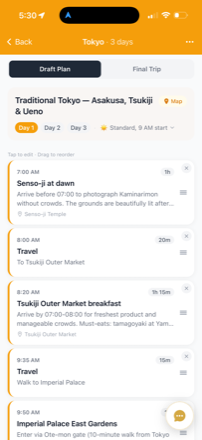
Your Itinerary
Google Maps
Budapest to Vienna is one of Europe's most popular city-to-city routes — a 250-kilometre journey connecting the Danube's two grandest capitals. Wondering which city to spend more time in? Our Vienna vs Budapest comparison breaks down the differences in culture, food, and budget. The OeBB Railjet train covers the distance in just 2.5 hours with advance fares from an extraordinary €19. Whether you want the speed and comfort of the train, the budget appeal of FlixBus, the scenic grandeur of a Danube river boat, or the flexibility of a private transfer, here is everything you need to know to travel smoothly between these two magnificent cities.
Quick Comparison
| Transport | Time | Cost | Comfort | Best For |
|---|---|---|---|---|
| OeBB Railjet | 2.5 hours | €19-39 | High | Most travelers |
| FlixBus / RegioJet | 2.5-3 hours | From €12 | Medium | Budget travelers |
| Danube Boat | 5-6 hours | €80-120 | High | Scenic experience |
| Private Transfer | 2.5-3 hours | €120-200 | High | Groups / families |
4 Ways to Get from Budapest to Vienna
OeBB Railjet Train
2.5 hours direct€19 - €39OeBB (Austrian Railways)
The OeBB Railjet is the fastest and most popular way to travel between Budapest and Vienna. Direct trains depart from Budapest Keleti station and arrive at Vienna Hauptbahnhof every 1-2 hours throughout the day. The 250km journey follows the Danube valley through picturesque Hungarian and Austrian countryside. Onboard, you get spacious seating, a restaurant car, free Wi-Fi, and power outlets at every seat.
Pros
- +The fastest option at just 2.5 hours — direct, comfortable, and punctual Austrian rail service
- +Frequent departures every 1-2 hours from early morning to late evening — highly flexible scheduling
- +City-centre to city-centre service — Budapest Keleti is centrally located and Vienna Hauptbahnhof connects to the U-Bahn
- +Advance Sparschiene tickets start from just €19 — extraordinary value for a 2.5-hour international train journey
Cons
- -Late bookings can push prices to €39-59 — advance purchase is essential for the best fares
- -Popular Friday and Sunday evening trains sell out quickly — book 2-3 weeks ahead for peak departures
- -Sparschiene tickets are non-refundable — only buy them if your plans are fixed
- -The train can be crowded in summer and during European holiday periods — reserve a seat for comfort
FlixBus
2.5 - 3 hoursFrom €12FlixBus, RegioJet
FlixBus and RegioJet operate multiple daily bus services between Budapest Nepliget bus station and Vienna Erdberg (or Vienna Hauptbahnhof bus stop). The journey takes approximately 2.5-3 hours depending on traffic and border crossings. Buses are modern, comfortable, and equipped with Wi-Fi, power outlets, and air conditioning. This is the budget option that offers genuine value.
Pros
- +The cheapest option with fares starting from €12 — sometimes even lower during flash sales
- +Multiple daily departures including early morning and late evening services
- +RegioJet buses include complimentary hot drinks, snacks, and entertainment — a premium bus experience
- +Journey time (2.5-3 hours) is only marginally longer than the Railjet train
Cons
- -Budapest Nepliget bus station is less centrally located than Keleti train station — allow extra transfer time
- -Subject to traffic delays and occasional border control checks that can add 15-30 minutes
- -Less legroom and space than the train — noticeable on a journey of this length
- -Vienna Erdberg bus station requires a U3 metro ride to reach the city centre
Danube River Boat (Seasonal)
5-6 hours€80 - €120Twin City Liner, various seasonal operators
A scenic hydrofoil or boat cruise along the Danube between Budapest and Vienna is the most memorable way to travel this route. The journey takes 5-6 hours upstream (Budapest to Vienna) and passes through the Danube Bend, Bratislava (optional stop), and the Wachau wine valley. This is not a transport option — it is an experience. Services operate seasonally from approximately April to October.
Pros
- +An unforgettable travel experience — cruising the Danube through some of Europe's most beautiful river scenery
- +Pass through (or stop at) Bratislava, making it a three-capital journey in one day
- +The Danube Bend between Budapest and Bratislava and the Wachau valley near Vienna are UNESCO-worthy landscapes
- +Onboard dining, open decks, and commentary create a mini-cruise experience rather than just transport
Cons
- -Significantly slower than train or bus — 5-6 hours upstream versus 2.5 hours by rail
- -More expensive at €80-120 versus €19-39 for the train
- -Seasonal operation only (approximately April to October) — not available in winter
- -Departure and arrival points may be different from city-centre stations — check dock locations
Private Transfer / Driving
2.5 - 3 hours€120 - €200 (transfer) or fuel + tollsPrivate transfer companies, rental cars
A private transfer or self-drive option takes approximately 2.5-3 hours via the A4/M1 motorway. Private transfers offer door-to-door service and can accommodate larger groups, making per-person costs competitive. Self-driving requires an Austrian motorway vignette (€9.90 for 10 days) and a Hungarian motorway e-vignette. This option is best for groups, families with lots of luggage, or those wanting to stop in Bratislava or the countryside.
Pros
- +Door-to-door service for private transfers — no navigating train stations or metro connections
- +Cost-effective for groups of 3-4 people — a €120-200 transfer split four ways is competitive with train tickets
- +Flexibility to stop in Bratislava (just off the route), the Neusiedler See lake region, or Austrian wine villages
- +Practical for families with young children and lots of luggage — no stairs, no crowds, no changes
Cons
- -Expensive for solo travelers or couples — €120-200 for a transfer versus €19 for a train ticket
- -Subject to motorway traffic, especially on Friday evenings and during European holiday weekends
- -Driving requires motorway vignettes for both Austria and Hungary — remember to purchase before entering
- -Parking in central Vienna is expensive and restricted — a car is a liability in the city centre
Vienna to Budapest (Reverse Direction)
All the same options work in reverse. Here are the key tips for the return journey.
Train from Vienna Hauptbahnhof
OeBB Railjet trains depart Vienna Hauptbahnhof for Budapest Keleti every 1-2 hours. The journey time is identical at 2.5 hours. Vienna Hauptbahnhof is connected to the U1 metro line and is easy to reach from anywhere in the city. The station has excellent facilities including shops, restaurants, and left-luggage lockers (€3-7). Allow 15-20 minutes to find your platform and board.
Day Trip Options
A day trip from Vienna to Budapest (or vice versa) is feasible but tight. Depart on an early morning Railjet, arrive by mid-morning, spend the day exploring the Parliament, thermal baths, and castle hill, then catch an evening train back. A day trip gives you a taste of the other city but both deserve at least 2-3 full days. If short on time, prioritise the ruin bars and a thermal bath in Budapest, or Schoenbrunn and a coffeehouse in Vienna.
Route Tips & What to Know
Currency Changes at the Border
Hungary uses the Hungarian forint (HUF) while Austria uses the euro (EUR). Do not exchange money at tourist exchange booths — use ATMs with a travel-friendly bank card (Wise, Revolut, or similar) for the best exchange rates. Most places in both cities accept card payments, but carry some cash for smaller establishments. Avoid exchanging money at train stations where rates are typically unfavourable.
Bratislava Stopover Option
Bratislava, the Slovak capital, sits roughly halfway between Budapest and Vienna and is a worthwhile detour. The train from Vienna to Bratislava takes just 1 hour, and Bratislava to Budapest is approximately 2.5 hours. Bratislava's compact Old Town, castle, and riverside promenade can be explored in half a day. Left-luggage lockers are available at Bratislava Hlavna Stanica. This three-capital itinerary is one of Central Europe's great rail journeys — and if you have extra days, consider continuing your trip to Prague from Vienna, just four hours further by train.
Best Seats and Onboard Experience
On the OeBB Railjet, second class is comfortable with spacious seating, power outlets, and Wi-Fi. First class adds quieter coaches, wider seats, and a complimentary coffee service for roughly €10-15 more. The restaurant car serves hot meals, sandwiches, and drinks. For scenery, the right side of the train offers occasional Danube views heading toward Vienna. Reserve a seat during peak travel times for guaranteed comfort.
Our Recommendation
OeBB Railjet Train
The OeBB Railjet is unbeatable for this route. Just 2.5 hours, direct, comfortable, and with advance fares from €19 — one of the best-value international train journeys in Europe. Book on oebb.at 2-4 weeks ahead for the best prices. The train is faster, more comfortable, and more reliable than every alternative.
RegioJet Bus
For the absolute lowest price, RegioJet buses from €12 include onboard drinks and snacks for a premium feel. FlixBus offers similar prices. The journey is only marginally longer than the train. For the small price difference, the train is usually worth it, but the bus is a solid budget choice.
Danube Boat
For a memorable journey between April and October, the Danube hydrofoil turns the trip into a scenic cruise through the Danube Bend and Wachau valley. Take the boat one direction and the train the other for the perfect combination. Book well in advance for summer weekends.
Frequently Asked Questions
Get Your Free Travel Guide
PDF download + weekly travel tips
Join our community and get a comprehensive travel guide with maps, budgets, and insider tips delivered to your inbox.
Unsubscribe anytime. No spam, we promise.