
Vienna vs Budapest
Two Danube capitals — Habsburg elegance versus thermal bath culture, coffeehouses versus ruin bars, compared head-to-head across culture, food, nightlife, attractions, budget, and more
Powered by ITINE
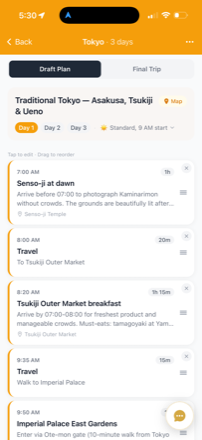
Get this guide as a tappable itinerary
Day-by-day plan, audio tours, and one-tap Google Maps — completely free.

Destinations
Your Itinerary
Google Maps
Vienna and Budapest are two of Europe's grandest capitals, both shaped by the Habsburg Empire and linked by the Danube, yet offering strikingly different experiences just 2.5 hours apart by train. Vienna is the polished imperial jewel — palaces, opera, coffeehouses, and classical music define a city that has perfected European elegance. Budapest is the dramatic rebel — thermal baths, ruin bars, a split Buda-Pest skyline, and a wild nightlife scene that makes it one of Europe's most exciting cities. Here is our honest, category-by-category breakdown.
Head-to-Head Comparison
Vienna
Imperial, refined, and unapologetically grand. Vienna is the city of the Habsburgs — a place where palaces, opera houses, and coffeehouses define the rhythm of life. The atmosphere is polished and measured, with a deep reverence for classical music, fine art, and intellectual tradition. Everything from the architecture to the coffeehouse etiquette speaks of a city that has spent centuries perfecting civilisation. Vienna feels ordered, elegant, and quietly magnificent.
Budapest
Grand, dramatic, and defiantly alive. Budapest is a city of contrasts — faded Habsburg grandeur meets ruin bar counterculture, Roman-era thermal baths sit next to brutalist apartment blocks, and the Parliament building rivals any in Europe for sheer theatricality. Buda's castle hill and Pest's grand boulevards are split by the Danube, creating one of the most dramatic cityscapes in Europe. Budapest has Vienna's bones but a wilder, more rebellious spirit — it feels less polished and more exciting.
Vienna
Vienna's food scene is built on coffeehouse culture and refined Austrian cuisine. Wiener Schnitzel (breaded veal, pounded thin and fried golden), Tafelspitz (boiled beef with apple horseradish), Sachertorte, Apfelstrudel, and Kaiserschmarrn are iconic. The coffeehouse is UNESCO-recognised — order a melange, a slice of cake, and linger for hours. The Naschmarkt has 120+ stalls spanning Ottoman-influenced street food to gourmet delicatessens. Mid-range restaurant mains cost €12-20.
Budapest
Budapest's food scene is rich, spicy, and deeply satisfying. Goulash (gulyasleves) is the national dish — a paprika-rich beef soup that warms the soul. Langos (deep-fried dough with sour cream and cheese), chimney cake (kurtoskalacs), chicken paprikash, and stuffed cabbage rolls are staples. The Great Market Hall is a food paradise. Budapest's food is bolder and more heavily spiced than Vienna's, with paprika as the defining flavour. Mid-range restaurant mains cost €7-14 — significantly cheaper than Vienna.
Vienna
Schoenbrunn Palace (Habsburg summer residence, 1,441 rooms), Hofburg Imperial Palace, St. Stephen's Cathedral, Belvedere Palace (Klimt's The Kiss), the Kunsthistorisches Museum, the Vienna State Opera, the Ringstrasse, the Spanish Riding School, Prater amusement park with its Giant Ferris Wheel, and the MuseumsQuartier. Vienna's attractions are concentrated and walkable — you can see the major highlights on foot within the Ringstrasse.
Budapest
Hungarian Parliament Building (Europe's third-largest parliament), Buda Castle and Fisherman's Bastion, Szechenyi Thermal Bath (one of Europe's largest), the Danube riverbank (UNESCO site), St. Stephen's Basilica, the Ruin Bar district (Szimpla Kert and dozens more), Heroes' Square, Gellert Hill and its panoramic views, Margaret Island, and the Shoes on the Danube Bank memorial. The split Buda-Pest layout across the river creates extraordinary views from every bridge.
Vienna
Vienna's nightlife is sophisticated and culturally rich. Evenings often begin at the opera or a classical concert — the Musikverein and Konzerthaus host world-class performances nightly. Cocktail bars like Loos American Bar and rooftop terraces offer refined drinking. The Bermuda Triangle near Schwedenplatz has livelier bars. The Ball Season (January-February) features over 450 balls — from the legendary Vienna Opera Ball to smaller, more accessible events. Vienna's nightlife rewards cultural engagement over late-night partying.
Budapest
Budapest's nightlife is legendary and one of Europe's best. The ruin bar scene — bars built in abandoned buildings and courtyards — is unique to Budapest. Szimpla Kert is the most famous, but dozens of others offer everything from craft cocktails to all-night techno. The Jewish Quarter pulses with energy every night. Thermal bath parties (Sparty at Szechenyi) combine clubbing with hot springs. A night out in Budapest costs roughly half of Vienna — beers start at €2, cocktails at €5-7.
Vienna
Vienna is a Western European capital with corresponding prices. A mid-range hotel costs €90-160 per night. Restaurant meals run €12-25 for a main course. A coffeehouse visit (melange and cake) costs €8-12. The Vienna City Card (€17-25) offers transport and museum discounts. Many churches and parks are free. A Schoenbrunn Palace Grand Tour ticket costs €24. Daily mid-range budget: €100-180 per person.
Budapest
Budapest is dramatically more affordable than Vienna — often cited as one of Europe's best-value capitals. A mid-range hotel costs €50-100 per night. Restaurant meals run €7-14. A thermal bath entry (Szechenyi or Gellert) costs €20-28. Beer in a ruin bar is €2-3. Budapest uses the Hungarian forint (HUF), not the euro. Daily mid-range budget: €60-110 per person — roughly 40% less than Vienna for a comparable experience.
Vienna
Vienna is consistently ranked among the world's safest cities and regularly tops quality-of-life rankings. Violent crime is extremely rare. Public transport is safe at all hours. Pickpocketing exists in tourist hotspots like Stephansplatz and Schoenbrunn but is less prevalent than in many European capitals. The city is well-lit, well-policed, and deeply orderly. Solo travelers, families, and women traveling alone all feel very safe.
Budapest
Budapest is safe for tourists with low violent crime. The main concerns are pickpocketing in tourist areas (especially the metro and around the Parliament), overcharging in some restaurants and bars (always check menus for prices), and taxi scams (use Bolt rather than hailing taxis on the street). The ruin bar district is busy and safe at night. Overall, Budapest is very safe but requires slightly more awareness than Vienna, particularly around tourist-targeted pricing.
Vienna
Vienna's public transport is outstanding — the U-Bahn, trams, and buses are clean, punctual, and comprehensive. A 24-hour ticket costs €8. The city centre is walkable, and the bike-share system (WienMobil Rad) is excellent. Vienna Airport connects to the centre via the CAT (16 minutes, €12) or S-Bahn (25 minutes, €4.40). Everything runs with Austrian precision — delays are rare and service is reliable.
Budapest
Budapest has an efficient metro system (including Europe's second-oldest metro line, M1), plus trams, buses, and the scenic Danube riverboats. A 24-hour travelcard costs around €5.50. The city is walkable, especially Pest's grand boulevard ring. Budapest Airport connects to the centre by bus 100E (30 minutes, €3.50). The historic tram line 2 along the Danube is one of Europe's most scenic urban tram rides — ride it at night for illuminated Parliament views.
Vienna
Vienna has a continental climate with warm summers (25-35°C) and cold winters (0-5°C). Spring and autumn are mild and pleasant (10-20°C). Summer brings long sunny days perfect for palace gardens and outdoor cafes. Winter is cold but magical — Christmas markets, Ball Season, and cosy coffeehouses make it worthwhile. Vienna's weather is reliable and moderate by Central European standards.
Budapest
Budapest's climate is very similar to Vienna's — the two cities are only 250km apart. Summers are warm to hot (25-35°C), winters are cold (around 0°C). The key difference is that Budapest's thermal baths make winter visits particularly rewarding — soaking in outdoor hot springs while snow falls around you is unforgettable. Christmas markets in both cities are excellent. Spring and autumn offer the best balance of weather and crowds.
Choose Vienna If...
- 1You love imperial grandeur, classical music, and the refined elegance of Habsburg palaces — Vienna is the ultimate expression of European high culture
- 2Coffeehouse culture is your idea of heaven — lingering over melange and Sachertorte in a marble-floored cafe while reading the newspaper
- 3World-class art museums are a priority — the Kunsthistorisches Museum, Belvedere, and Albertina house extraordinary collections
- 4The Vienna State Opera, Musikverein concerts, and the Ball Season (450+ balls each winter) are on your bucket list
- 5You prefer a polished, orderly city where everything runs like clockwork and the quality of life is among the highest in the world
- 6Schoenbrunn Palace, the Ringstrasse, and the grandeur of the Habsburg legacy appeal to your sense of history
Choose Budapest If...
- 1You want dramatic cityscapes — Buda Castle, the Parliament, and the Danube bridges create one of Europe's most photogenic skylines
- 2Thermal bath culture calls to you — Budapest has over 120 thermal springs and iconic bathhouses like Szechenyi and Gellert
- 3Ruin bars, late-night energy, and one of Europe's best nightlife scenes are important to your trip
- 4Your budget matters — Budapest offers a comparable grand European experience at roughly 40% less than Vienna
- 5Bold, paprika-spiced Hungarian cuisine — goulash, langos, and chicken paprikash — sounds more exciting than Viennese refinement
- 6You prefer a city with a wilder, more rebellious edge — Budapest's faded grandeur and counterculture are its magic
Our Verdict
Vienna and Budapest are the twin jewels of the Danube and together they offer one of Europe's greatest city pairings. Vienna wins on imperial grandeur, classical music, coffeehouses, art museums, and sheer polish. Budapest wins on thermal baths, ruin bar nightlife, dramatic cityscapes, bold cuisine, and extraordinary value for money.
For refined culture lovers, Vienna is a masterpiece. For adventurous travelers who want excitement, thermal springs, and vibrant nightlife at a fraction of the price, Budapest is irresistible. With just 2.5 hours between them by Railjet train, combining both is the smart move — and one of Europe's most rewarding short itineraries.
Get Our Vienna ItineraryHow to Combine Both Cities
By Train (Recommended)
The OeBB Railjet runs direct between Vienna Hauptbahnhof and Budapest Keleti station in just 2.5 hours, departing every 1-2 hours throughout the day. The train is comfortable, punctual, and scenic — following the Danube valley through Austrian and Hungarian countryside. Advance Sparschiene tickets cost €19-39.
Book on oebb.at 2-4 weeks ahead for the best fares. First class is worth considering on this route — it includes a quiet coach, wider seats, and complimentary coffee. A day trip is technically possible but we recommend at least 2 nights in each city to do them justice.
By Danube Boat (Seasonal)
For a more scenic alternative, a Danube hydrofoil operates seasonally (April to October) between Vienna and Budapest with a stop in Bratislava. The journey takes 5-6 hours downstream (Vienna to Budapest) and is a beautiful way to see the Danube valley, Wachau wine region, and Slovak capital.
This is a slower but memorable option — best done one-way with the train in the other direction. Prices vary by operator and season. Twin City Liner operates the Vienna-Bratislava leg, while other operators cover the full Vienna-Budapest route. Book well in advance during peak summer season.
Frequently Asked Questions
Get Your Free Travel Guide
PDF download + weekly travel tips
Join our community and get a comprehensive travel guide with maps, budgets, and insider tips delivered to your inbox.
Unsubscribe anytime. No spam, we promise.